Kobe AndersonBehavioral neuroscience · Open research

Kobe Anderson / Research in progress / 2026

I take an idea
or question and
make something real.

I’m Kobe, a behavioral neuroscience M.A. candidate at Towson University. I build software, work at the bench, and make tools for the questions I want to investigate.

01 / About

The question
comes first.

My background is in behavioral neuroscience, with interests in learning, memory, spatial navigation, and individual differences in behavior. The questions lead me between behavioral experiments, data analysis, programming, and physical prototyping.

I see my strength in taking a problem far enough that we can actually examine it: a working interface, an analysis we can inspect, or a physical tool we can try. I’m willing to learn what the next step requires—and change direction when the evidence calls for it.

This site is a place to share that work as it develops, including its limits and the questions I haven’t answered yet.

02 / Open research projects

Work in the open.

MobileDLC and NeuroPipe-SABV are public betas. The code is available to inspect; broader usability, compatibility, and methodological review are still part of the work. A working demonstration is a starting point for that review.

Public beta · Review invited

MobileDLC

Can labeling fit the way people actually work?

A touch-based frame-labeling workflow for DeepLabCut. The aim is to let researchers work from a phone or tablet and bring their annotations back into their analysis workflow.

  • Place, move, and remove keypoints with touch controls.
  • Inspect frames with pan, zoom, and adjustable markers.
  • Test the local labeler with a copy of a single-animal DLC project.
Where I want criticismAnnotation precision, confusing gestures, accessibility, device behavior, and whether exported labels preserve the intended data.

The local and hosted versions have different setup and export paths. The hosted lab workspace is access-controlled; start with the repository instructions for your own test.

The question → The workflow

  1. Choose a frame.
  2. Place or adjust a point.
  3. Save the annotation.
  4. Export and check it in DLC.

Workflow overview, not an interface screenshot. The local editor exports H5/CSV copies. The hosted workflow exports JSON that requires a separate conversion step.
Public beta · MIT licensed

NeuroPipe-SABV

How can sex as a biological variable stay visible throughout an analysis?

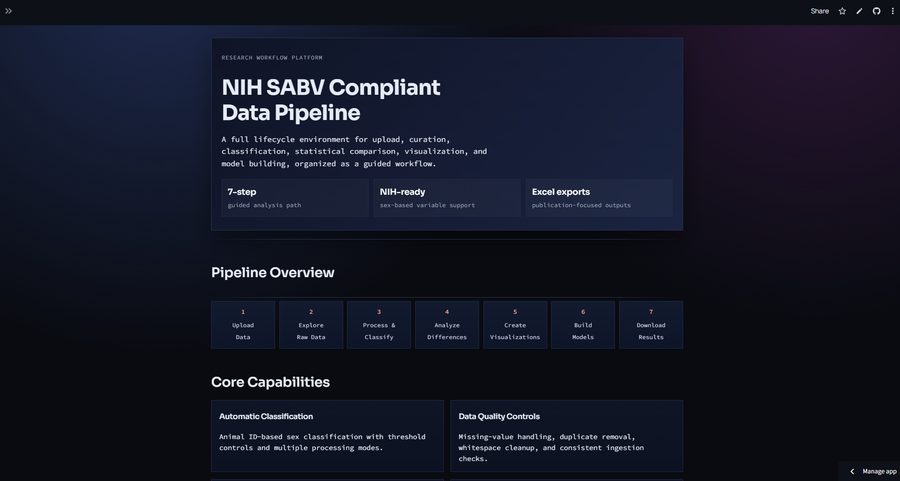
A Streamlit workflow for exploring, preparing, comparing, and visualizing preclinical behavioral data with explicit attention to sex. I want the assumptions behind those steps to be easier to inspect and question.

Where I want criticismSex metadata, data cleaning decisions, statistical assumptions, repeated observations, multiple comparisons, and the meaning of the figures it produces.

The tool does not certify NIH compliance or validate a study design. Start with example data and inspect processing choices before using results.

Existing NeuroPipe-SABV project screenshot showing analysis outputs
Project archive / An example of the analysis workflow.
Open source · MIT licensed

Research discovery

How can I spend less time repeating searches and more time reading?

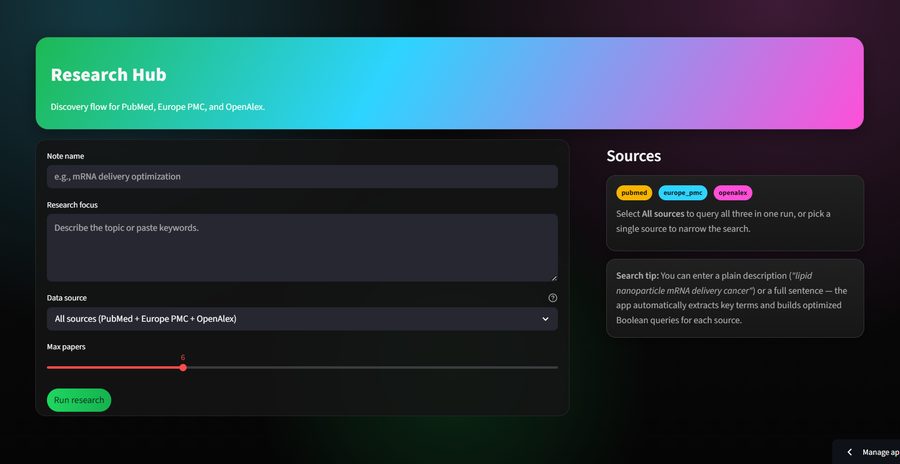
A research discovery tool that queries PubMed, Europe PMC, and OpenAlex, with assistance translating a question into Boolean searches.

Search assistance still needs scrutiny: inspect the generated query, check source records, and look for important papers the search missed. This is not a guarantee of a comprehensive literature search.

Research Hub interface from the existing project archive
A view of the research discovery project.

03 / Building for science

What could your
printer do for science?

I want this section to be useful beyond showing that I can make a model. The starting point is a practical guide: how to turn an awkward lab task into a small, testable design.

Start with something bounded—a holder, an organizer, or a positioning jig. Define what it needs to do, measure the things it touches, and print a fit test before committing to a full design.

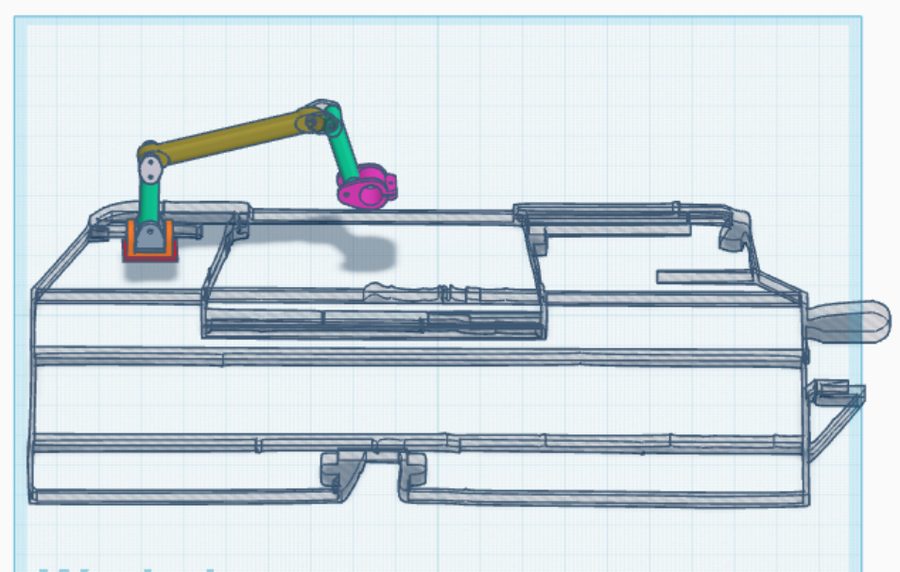
Kobe’s existing Tinkercad design work
Design archive / A CAD study. The guide walks through requirements, prototyping, and evaluation.

04 / How I work

From a question to something we can test.

01 — Ask

Find the real constraint.

What question matters? What is getting in the way? What would a useful result look like?

02 — Build

Make a working version.

Learn the method, write the code, or design the part needed to make the idea testable.

03 — Examine

Look for where it fails.

Check the output against something known. Invite someone else to try the workflow.

04 — Revise

Let evidence change it.

Document the limits, fix what matters, and share enough for others to inspect the work.

05 / Research & selected work

The questions behind the tools.

My research interests include spatial navigation, learning, memory, and individual differences in checking behavior. The software and fabrication work grow out of wanting to investigate questions more directly.

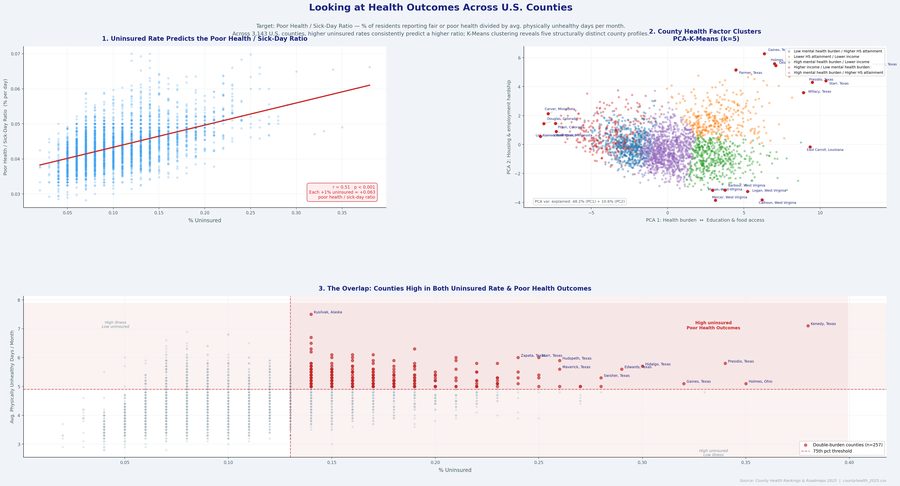
County health analysis charts from Kobe’s project archive

County health analysis

Exploring relationships between health insurance coverage and health outcomes using public county-level data, regression, clustering, and visual summaries. These are observational analyses; associations do not establish causation.

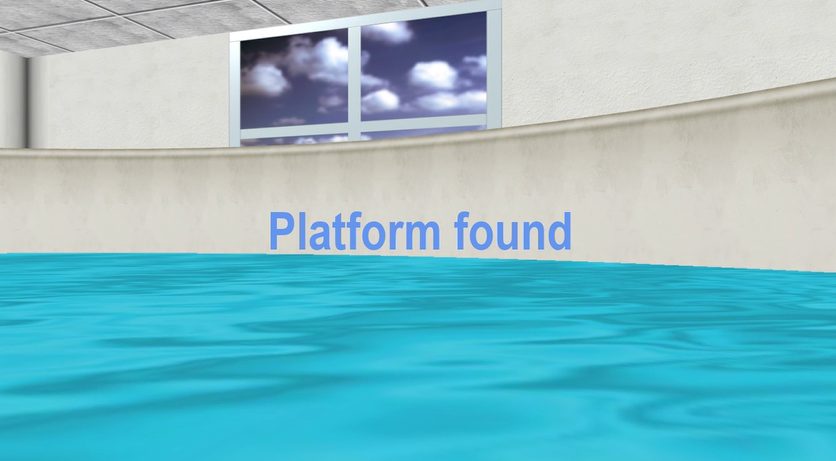
Virtual water-maze prototype from Kobe’s project archive

Virtual water-maze exploration

A software prototype for exploring spatial-navigation task ideas. A functioning virtual environment is a development milestone; equivalence to a validated behavioral task remains a separate question.

06 / Collaborate

Bring a question.
Or challenge something I’ve built.

I want to put these skills to use helping other people do research. If you have a workflow that keeps getting in the way, an idea you want to make testable, or criticism of one of these projects, I’d like to hear it.

For project feedback: open an issue in the relevant repository. Include what you tried, what you expected, and what happened.

For collaboration or scoped paid work: tell me the research goal, the practical constraint, and the deliverable you need. We can establish scope, timing, and cost before work starts.

kobe.q.anderson@gmail.com ↗

Find the work on GitHub ↗